Jumper
A booking platform and modular studios for musicians.
- ROLE
- Founder · solo
- PLATFORM
- Next.js · Convex · Stripe Connect
- MODULE
- Solid timber · CLT
- STATUS
- Platform in testing · module in development
Jumper has two halves. The platform makes unused time in rehearsal rooms and studios bookable, with live availability, booking and payment. The hardware side is a studio module made from solid timber, built in a factory and delivered in one piece.
How it started
I have built studios since the one in my childhood bedroom, then rooms for friends and colleagues, one at a time. Then I was asked to come to Cologne and build studios for the Goldmann Tower, the building of Xatar and his label Goldmann. Around thirty rooms.
The Tower was its own world. People came and went all day, rappers, producers, musicians. It was a great time to be there. But by the time I arrived, most things had been decided. Large parts of the building were already fitted out, and the timeline was far too short. Realistically I would have needed to be brought in six months earlier. Acoustics, air conditioning and room layouts had problems that were already set in stone, or in drywall.
That is where the question behind Jumper comes from. You cannot build thirty studios the way you build three. What if the room were a product, repeatable, made in a factory and movable?
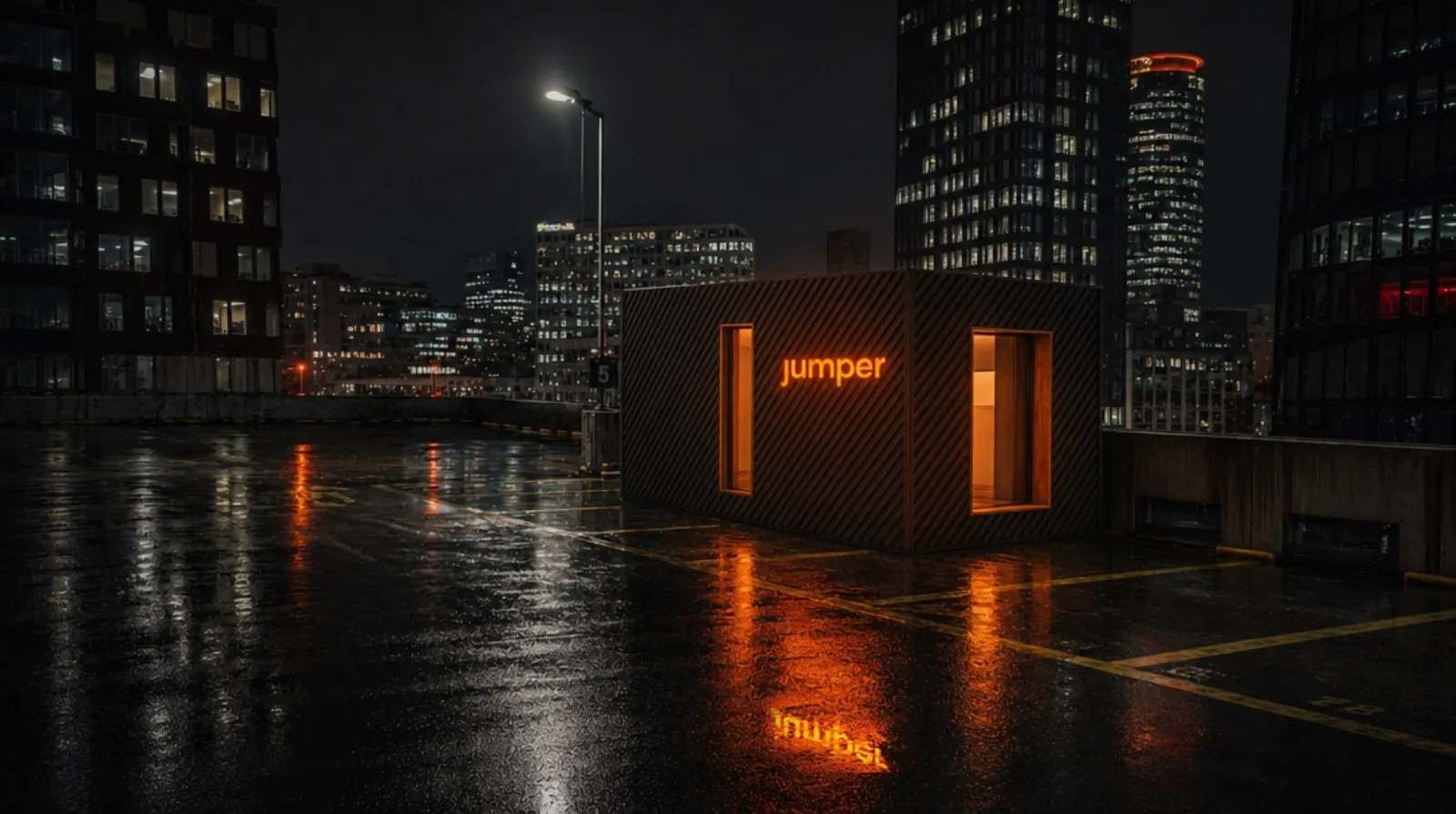
From interiors to a box
I first built several prototypes of acoustic interiors. The system works. The planning data goes to a timber cutting centre, and the parts arrive on site numbered like an IKEA manual. Seeing a concept work like that is a great feeling.
But every existing room is different. Walls are crooked, measurements do not match, and roof slopes and columns are where they are. Design and planning took a disproportionate amount of work, and the strengths of the system never came into play. So I took the consequence: the whole room becomes a module. The box around the interior is made under controlled conditions too, to exact dimensions and reproducible, without custom fitting every time.
One box, several modules
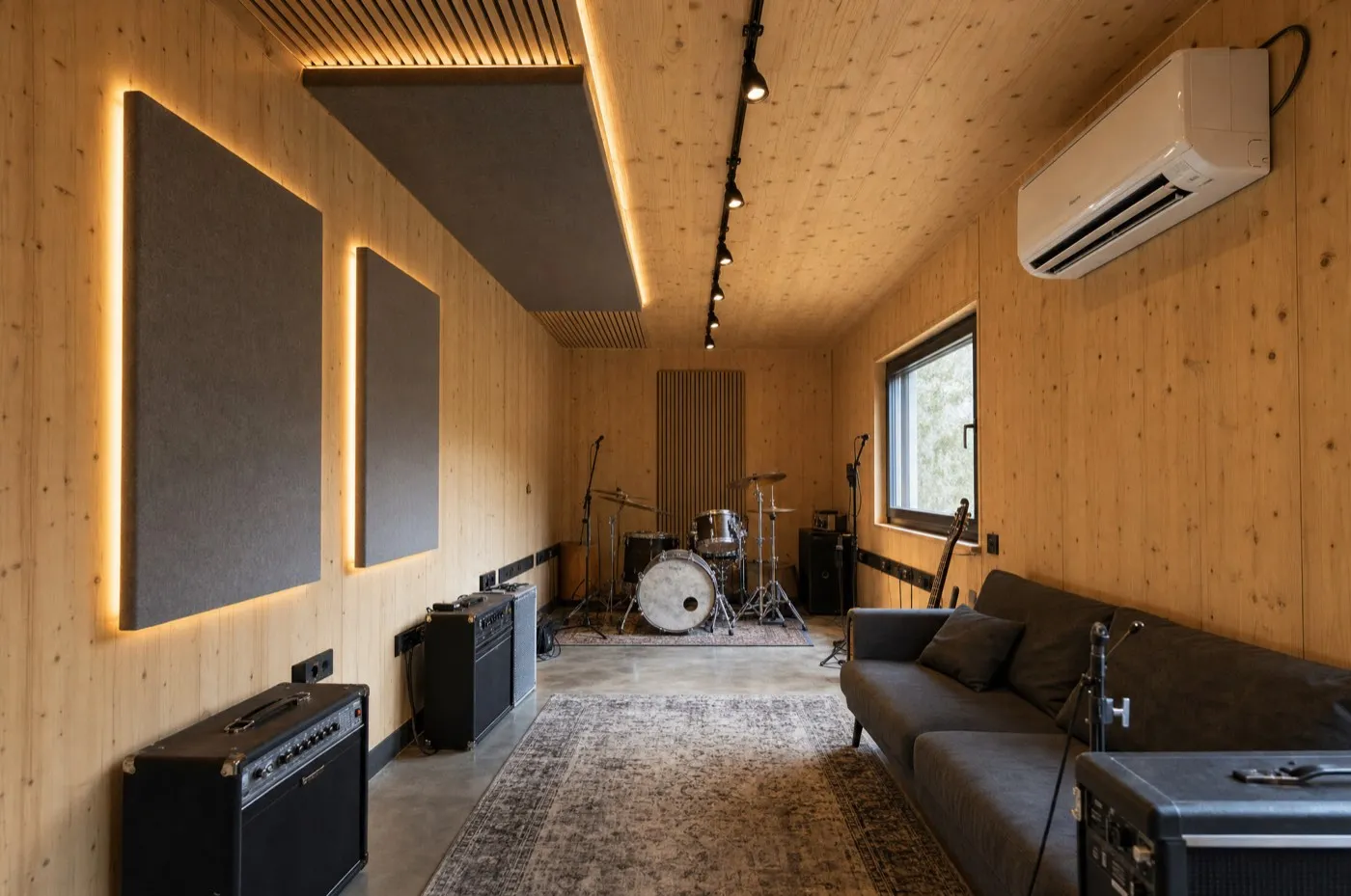
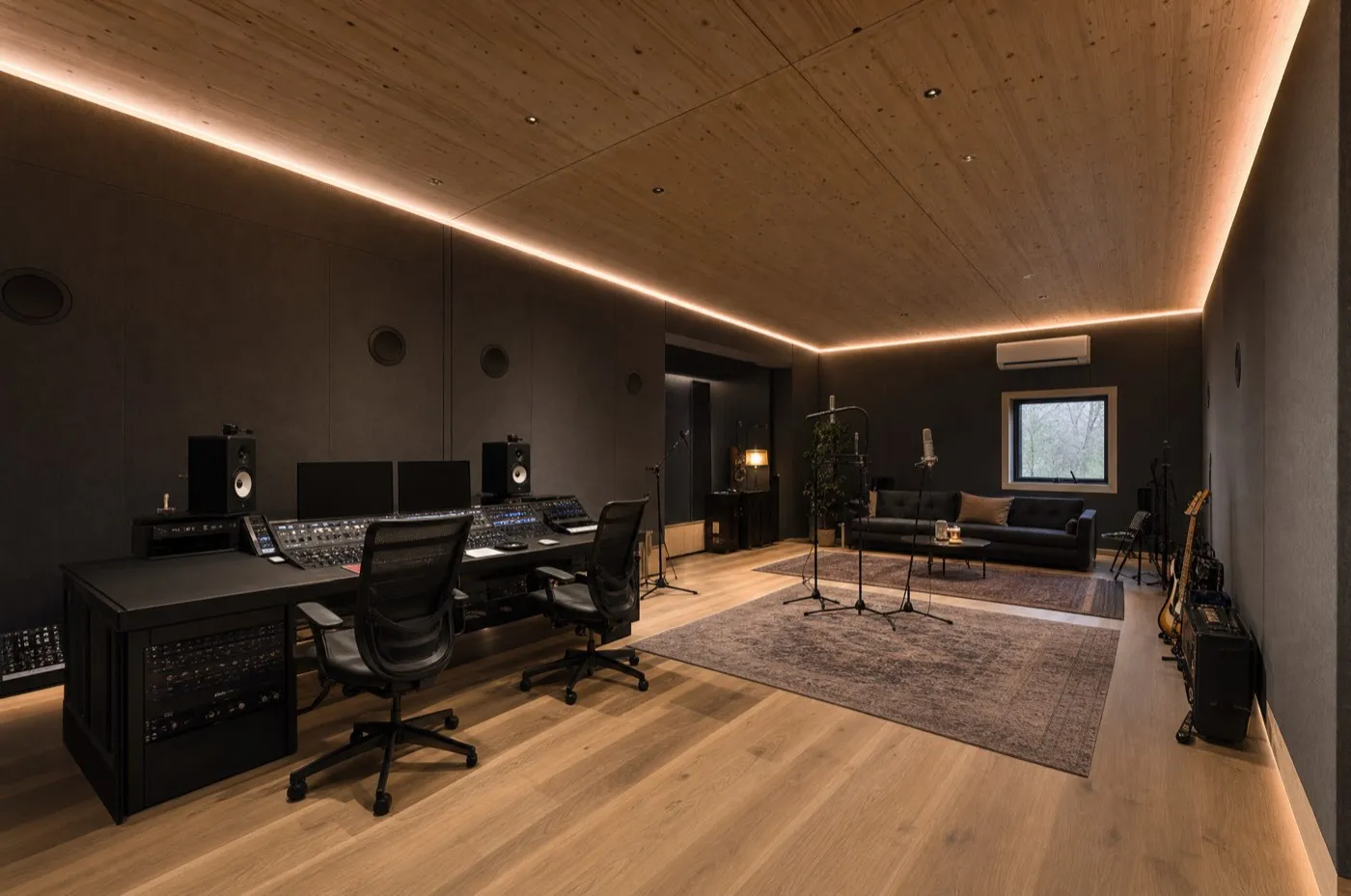
The design starts with a solid-timber box, roughly 7 by 3 metres. Jumper ONE uses one box; TWO joins two. Both come in a Live and a Studio version. Live leaves the wood visible and adds acoustic treatment to the ceiling and one wall. Studio treats every surface. The parts are cut by CNC and prefabricated in a workshop, then the module goes onto a truck and is placed by crane. Being able to move the room later is part of the design.
The platform
The first version of jumper.music ran in 2025 on Supabase, Clerk and Cal.com. Cal.com is why I built @mrfinch/booking. In January 2026 I started the second version on Convex and on that component, with Stripe Connect for paying room owners, WorkOS for organisations, and German and English. Agents write the code; I decide what it should do and click through it myself.
In February I ran an experiment. I gave Claude Code with its newest model 26 issues at once and let it build overnight, from a feed to a loyalty programme. I wanted to see how far the agent gets on its own, which is worth testing with every new model and harness. In April I hid most of it behind feature flags again. Messaging, reviews and recurring bookings are built and switched off for the first version.
That comes from producing. When a chorus does not hit, something may be missing. Much more often, the verses and the pre-chorus are so crowded that the chorus cannot stand out against them. Taking things out usually helps more than adding more.
"It's really about getting people into the same room."From a recorded working session, February 2026
Where it stands
The platform is not in production yet. The first studios are onboarded as demo users, and payments run in Stripe's test mode. The module is still in development. For Convex's All Gas hackathon I also built RoomScout, to help bands find rooms that already exist.